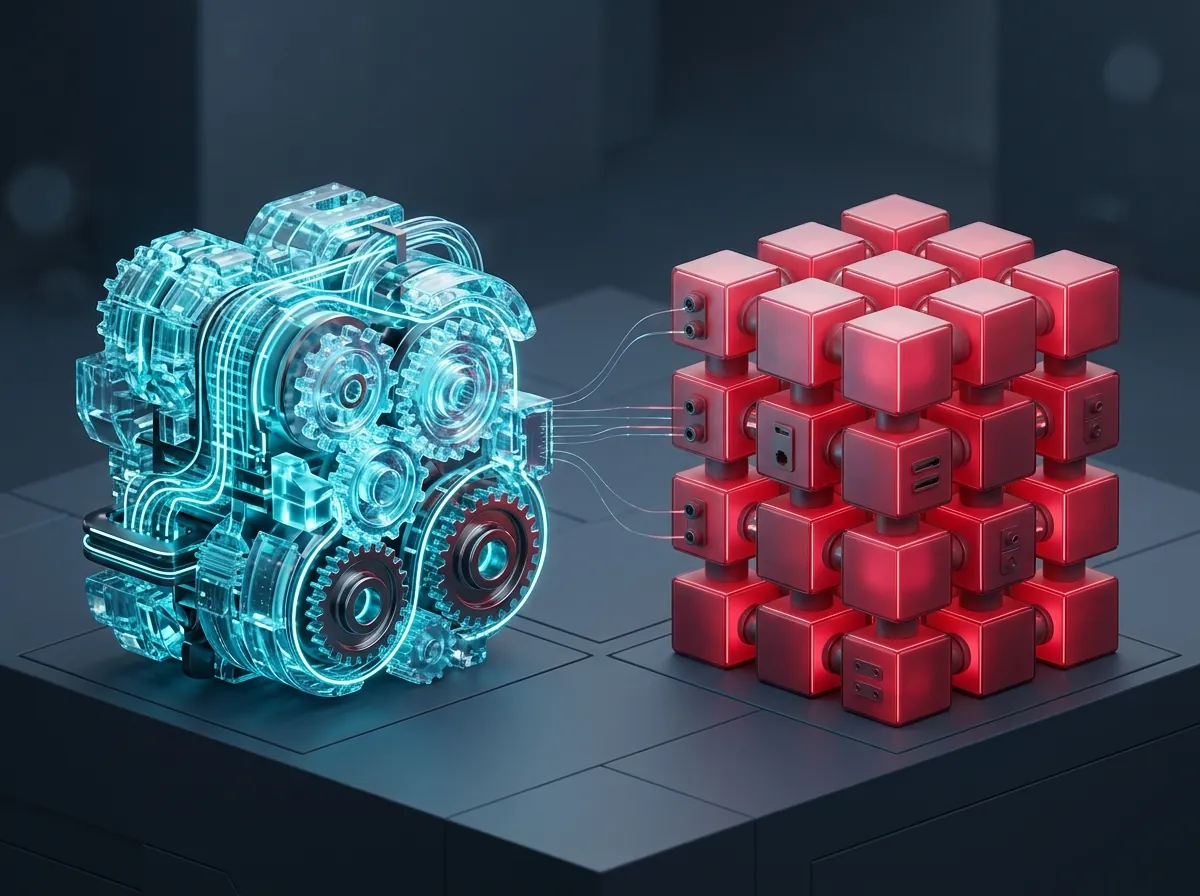
Enterprise AI Agent & RAG Chatbot Development: 2026 Architecture Guide
Architect scalable, zero-hallucination autonomous systems with this technical blueprint for enterprise AI agent architecture and production-grade RAG chatbot development.

Safeer Ullah Khan
Head of R&D & Full-Stack Web Developer • Published October 19, 2026
The Shift to Enterprise AI Agent Systems in 2026
Modern enterprises are moving beyond conversational toys. Today, competitive advantage is dictated by an enterprise AI agent infrastructure that connects reasoning engines directly to internal software pipelines. Whether automating Tier-1 customer support or parsing multi-million-dollar supply chain invoices, investing in custom AI chatbot development services has become an operational necessity.
Unlike static chatbots, modern AI agent development couples semantic reasoning with autonomous tool execution. An enterprise AI agent evaluates query intent, checks user authorization levels, executes API calls to platforms like Stripe or Salesforce, and validates outputs before returning answers to customers.
Why Production RAG Chatbot Development Outperforms Naive LLMs
Foundational LLMs possess parametric world knowledge, but they know nothing about your private internal quarterly reports, proprietary product specs, or real-time warehouse inventory. That is where professional RAG chatbot development proves indispensable.
Retrieval-Augmented Generation constrains generation strictly to retrieved factual chunks. Our engineers at JabiruLabs implement Advanced RAG architectures featuring semantic document chunking, dense-sparse hybrid vector indexing, and cross-encoder re-ranking to achieve 99%+ factual precision for enterprise AI solutions.
| RAG Architecture Stage | Naive Implementation | Enterprise AI Agent Grade (JabiruLabs Standard) |
|---|---|---|
| Ingestion & Parsing | Raw unstructured PDF/TXT dump | Layout-aware parsing with table preservation and metadata tagging |
| Chunking Strategy | Fixed 500-token boundaries | Contextual sliding window with parent-child hierarchical linking |
| Vector Retrieval | Basic cosine similarity | Hybrid search combining dense embeddings with BM25 sparse keyword matching |
| Re-Ranking Layer | Direct prompt injection | Cohere / BGE Cross-Encoder re-ranking to filter irrelevant noise |
| Security & Guardrails | Basic system prompt guidance | NeMo guardrails, PII redaction, and strict Role-Based Access Control |
Multi-Agent Orchestration Patterns for Complex Workflows
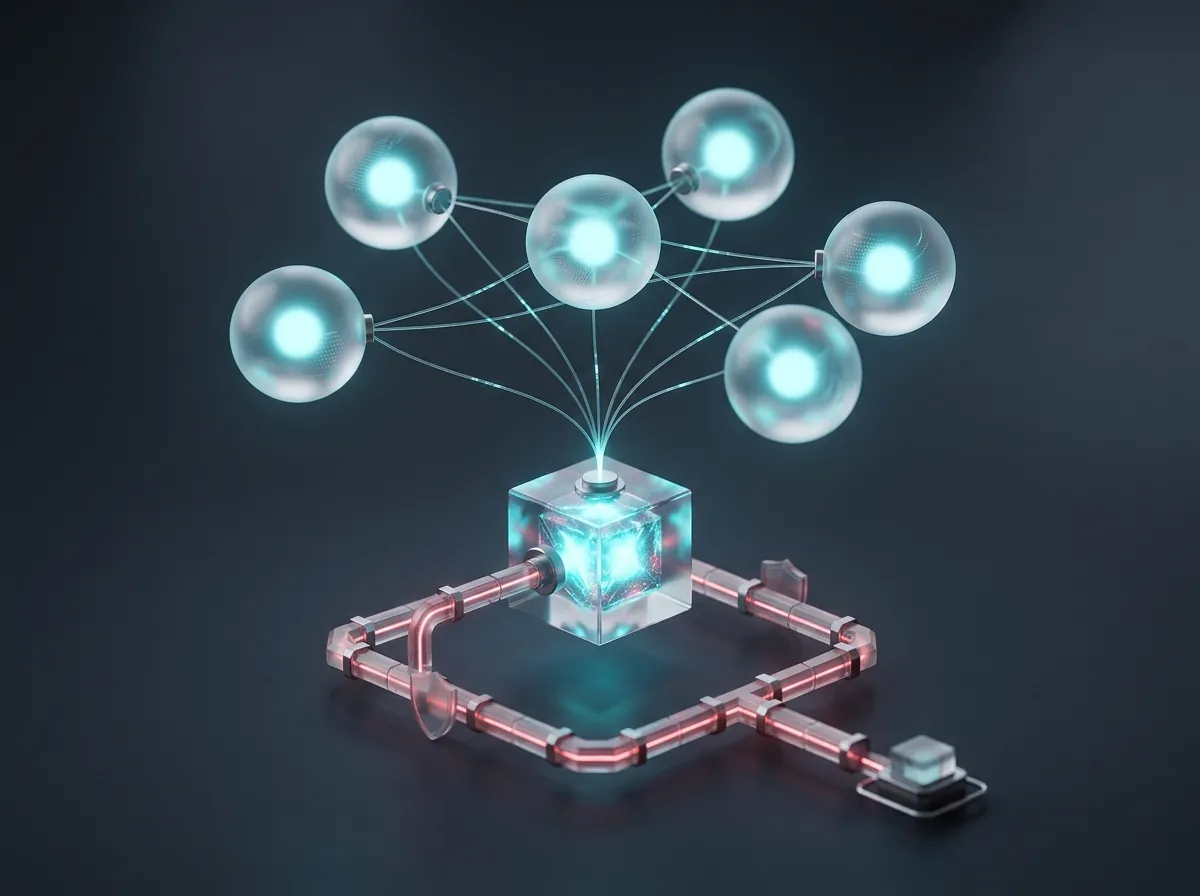
When scaling an enterprise AI agent across accounting, legal, and engineering divisions, a single monolithic prompt inevitably fails. Enterprise teams rely on stateful multi-agent frameworks like LangGraph and AutoGen. In this architecture, a Supervisor Agent triages requests and delegates subtasks to specialized worker agents.
This decoupled approach ensures reliable execution when integrating your AI systems with custom website development and cloud web applications.
Core Production Agent Archetypes:
- Triage & Intent Classifier: Evaluates incoming requests and routes them to appropriate domain pipelines.
- Vector Knowledge Retriever: Executes high-speed hybrid queries across vector databases like Qdrant and Pinecone.
- API Transaction Agent: Securely invokes internal REST/GraphQL endpoints using strict OpenAPI specifications.
- Verification & Fact-Checker: Cross-examines generated answers against ground-truth source documents before delivery.
Enterprise Data Privacy, Compliance, and Deployment
No enterprise should risk sending confidential intellectual property to third-party public models that train on customer data. High-security RAG chatbot development mandates deploying quantized open-source models inside private cloud enclaves.
By leveraging private AWS or Azure infrastructure, companies retain 100% data sovereignty while meeting stringent SOC-2, HIPAA, and GDPR regulatory compliance standards.
Key Engineering Takeaways
- • Deploy hybrid search (dense embeddings + BM25 keyword matching) to dramatically improve technical jargon recall.
- • Incorporate semantic caching with Redis to reduce LLM API inference costs by up to 50%.
- • Connect with our dedicated AI development team to build a production-ready enterprise AI agent tailored to your business.
Frequently Asked Questions
What is an enterprise AI agent and how does it differ from a traditional rule-based chatbot?
An enterprise AI agent is an autonomous, goal-directed software system powered by advanced Large Language Models. Unlike legacy rule-based chatbots that follow hardcoded decision trees, an enterprise AI agent reasons iteratively (using ReAct loops), plans multi-step tasks, invokes external REST APIs, searches private corporate vector stores, and executes transactions autonomously.
Why is RAG chatbot development essential for commercial enterprise workflows?
RAG chatbot development connects LLMs directly to your company's proprietary data stores (such as ERP records, PDF manuals, and customer histories). By injecting verified, timestamped context into prompts, RAG eliminates factual hallucinations and ensures answers cite verifiable internal documentation.
How much does custom enterprise AI agent development cost for businesses?
Custom enterprise AI agent development typically ranges from $5,000 for specialized single-workflow assistants to $25,000+ for enterprise multi-agent clusters integrated with CRM, SQL databases, and private cloud VPCs. Partnering with a dedicated AI engineering team like JabiruLabs reduces ongoing development costs by up to 60%.
How do you secure proprietary company data during RAG chatbot development?
Enterprise security requires deploying self-hosted open-source foundation models (such as Llama 3.3 or Mistral) inside isolated virtual private clouds (AWS VPC or Azure Private Link), implementing role-based access control (RBAC) at the vector chunk level, and encrypting data both in transit and at rest.
Related Engineering Guides
Outsource Software Development to Pakistan: 2026 Software House Hiring Guide